
Carthage: Complete Guide to the Ancient Ruins
Carthage: Where Ancient History Meets the Mediterranean
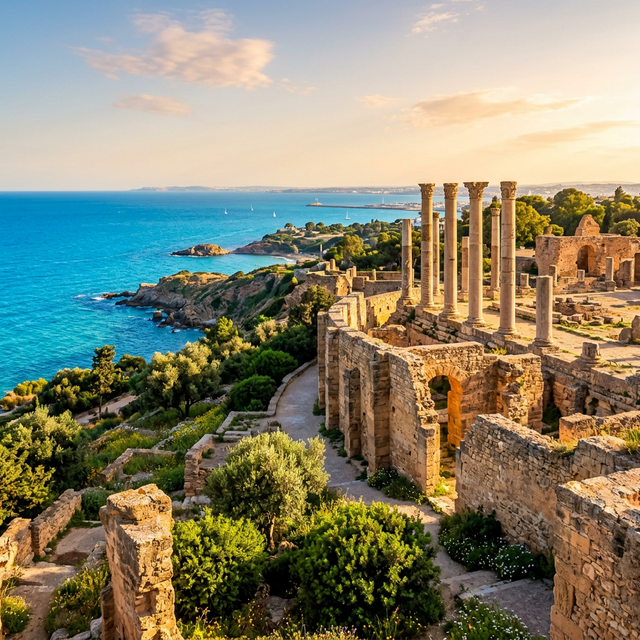
Carthage is one of the most legendary cities in world history. Founded by Phoenician settlers in 814 BC, it grew into one of the greatest powers of the ancient world before being destroyed by Rome in 146 BC. Today, the ruins are scattered across a wealthy suburb of Tunis — a UNESCO World Heritage Site overlooking the sea.
Top sites to visit
1. Byrsa Hill
The heart of ancient Carthage. Climb to the top for panoramic views over the Gulf of Tunis. The hilltop museum (Musée National de Carthage) has Punic artifacts, Roman mosaics, and a detailed model of the ancient city.
2. The Tophet
The most controversial site — a sacred burial ground where the Carthaginians placed cremated remains. Hundreds of stone stelae (markers) remain, some dating to the 7th century BC.
3. Antonine Baths
The largest Roman baths ever built in Africa. Only the foundations remain, but the scale is staggering. The location right on the seafront makes it one of the most atmospheric ruins in Tunisia.
4. Roman Villas
Well-preserved mosaic floors and colonnaded houses near the amphitheatre. The House of the Aviary has stunning bird mosaics.
5. Acropolium (Cathedral of St. Louis)
A 19th-century cathedral built on Byrsa Hill by the French, now used as a concert venue. Beautiful Moorish-Byzantine architecture.
Practical info
Combine with Sidi Bou Said
Carthage and Sidi Bou Said are just 5 minutes apart. Spend the morning exploring ruins, then lunch and sunset in Sidi Bou Said. We offer combined day trip transfers.